

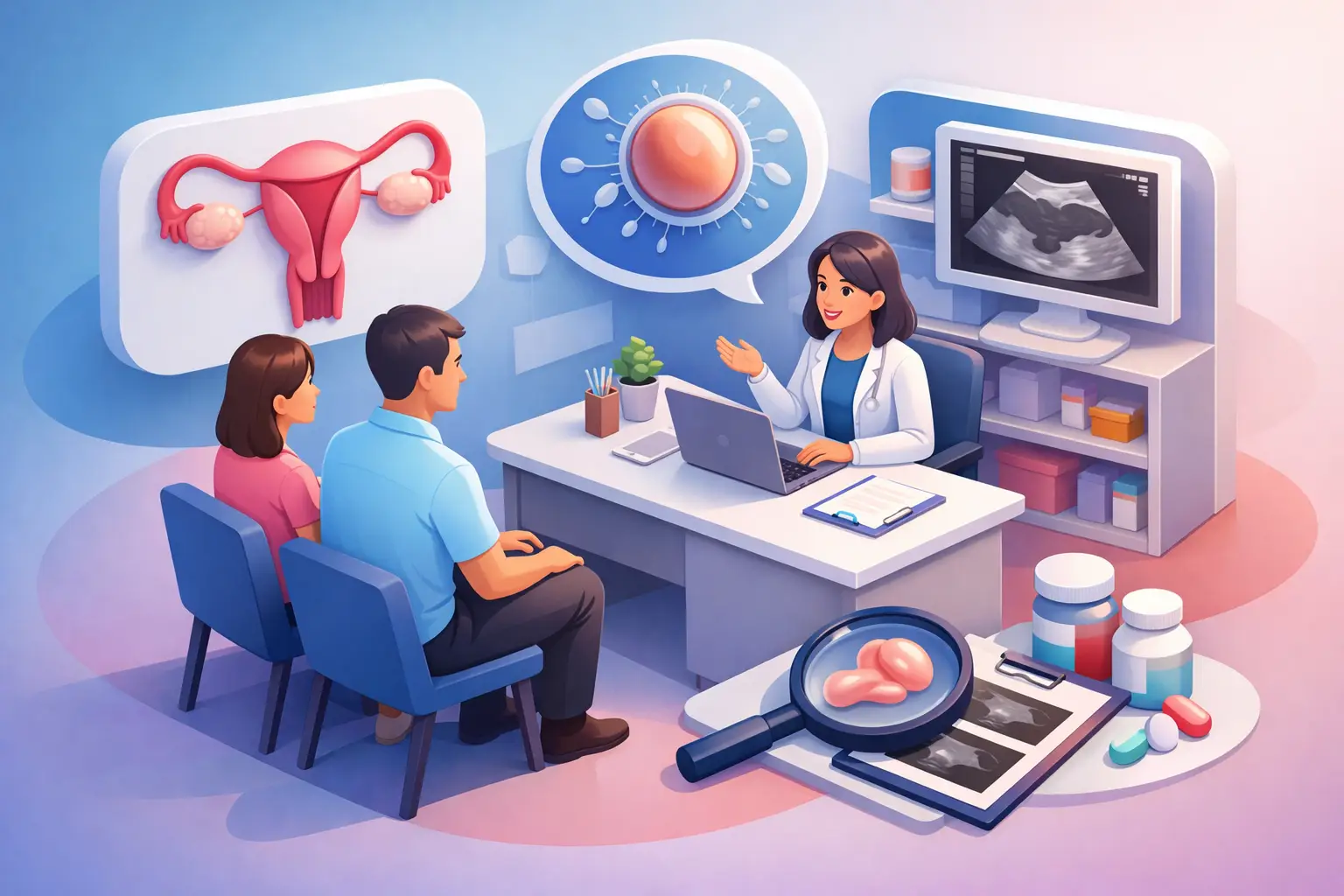
A fertility recommendation can feel urgent, especially when you have already spent months tracking cycles, attending appointments, or recovering from a procedure. An infertility second opinion specialist provides space to examine the full picture before you commit to the next step. This is not about questioning every clinician you have seen. It is about making a high-stakes decision with a clearer understanding of your diagnosis, options, and priorities.
For some women, a second opinion confirms that the current plan is appropriate and offers welcome reassurance. For others, it identifies a pelvic condition, hormonal issue, anatomical factor, or fertility-preserving treatment option that needs closer attention. Both outcomes can be valuable.
When a second opinion may be worthwhile
Infertility is not one diagnosis. It can involve ovulation, egg reserve, sperm factors, fallopian tube function, the uterine cavity, endometriosis, adenomyosis, fibroids, prior infection, previous pelvic surgery, or a combination of concerns. Sometimes tests are normal but pregnancy has still not occurred, a situation often described as unexplained infertility. A careful review can help determine whether the evaluation has been sufficiently complete for your individual history.
A second opinion is particularly reasonable when you have been advised to proceed quickly to IVF without a clear discussion of why, when you have had repeated unsuccessful IUI or IVF cycles, or when imaging suggests fibroids, ovarian cysts, adenomyosis, or endometriosis. It can also be useful after recurrent miscarriage, an ectopic pregnancy, or prior surgery that may have affected the uterus, ovaries, or fallopian tubes.
Pelvic pain, pain during sex, painful bowel movements around menstruation, heavy bleeding, and persistent bloating should not be separated from a fertility discussion. These symptoms may point to endometriosis or adenomyosis, conditions that can affect fertility and may require a more specialized assessment. Not every finding requires surgery, and surgery is not automatically the best next step. The right approach depends on symptom severity, imaging, ovarian reserve, age, previous treatment, and how soon you hope to conceive.
What an infertility second opinion specialist reviews
The purpose of a second opinion is not simply to repeat every test. It is to interpret existing results in context and decide what information is still missing. A detailed consultation should begin with your menstrual history, duration of trying to conceive, pregnancies and losses, family history, medications, past infections, and any prior gynecologic procedures.
Your specialist may review hormone tests, ovulation patterns, ovarian reserve markers, semen analysis, ultrasound scans, tubal testing, hysteroscopy reports, operative notes, and embryo or IVF records where relevant. Timing matters. A hormone result or ultrasound finding can mean different things depending on when in the cycle it was performed and whether you were using fertility medication.
High-quality pelvic imaging is especially important when endometriosis, adenomyosis, fibroids, or ovarian cysts are suspected. A routine ultrasound may detect some abnormalities, but deep infiltrating endometriosis can be difficult to identify and may involve the bowel, bladder, pelvic nerves, or ligaments supporting the uterus. In complex cases, a specialist assessment can clarify the extent of disease and whether it is likely to affect fertility, cause symptoms, or complicate pregnancy treatment.
The consultation should also include your partner where appropriate. Fertility care is often described through the woman’s medical history, yet male factors contribute to a substantial proportion of infertility cases. A second opinion should avoid placing the entire burden of investigation or treatment on one person.
Questions a specialist should help answer
A useful review gives you more than a new recommendation. It should help you understand what is known, what remains uncertain, and what each option may realistically achieve. You may want clear answers to questions such as whether your tubes are open, whether the uterine cavity is suitable for implantation, whether a fibroid is likely to matter, or whether surgery could protect fertility rather than delay treatment.
You should also understand the trade-offs. Removing an endometrioma or fibroid may improve symptoms or address an anatomical concern, but ovarian surgery can affect ovarian reserve and any procedure carries risks. Proceeding directly to IVF may be sensible for some women, particularly when time is limited, but it may not address significant pain or disease outside the uterus. A careful plan weighs pregnancy goals alongside long-term pelvic health and quality of life.
Fertility-preserving surgery requires careful judgment
Women with complex pelvic disease are sometimes told that surgery is either essential or completely unnecessary. The reality is more nuanced. For mild disease without significant symptoms, expectant management or fertility treatment may be appropriate. For severe endometriosis, large fibroids distorting the uterine cavity, symptomatic adenomyosis, or cysts with concerning features, surgery may have an important role.
The experience of the surgeon matters most when disease is extensive. Deep endometriosis can involve delicate structures and, in some cases, more than one organ system. The aim is not simply to remove visible disease. It is to treat it safely, preserve healthy ovarian tissue where possible, maintain function, and create a recovery plan that supports future fertility.
Minimally invasive approaches such as 3D laparoscopy, robotic gynecologic surgery, and selected scarless vaginal procedures can offer greater precision with smaller incisions, less postoperative pain, and a faster return to daily activities. These methods are not appropriate for every condition or every patient. The key question is whether the proposed technique matches the extent of disease and the surgeon’s expertise, not whether it is the newest option available.
At Dr. Sharifah Halimah Jaafar’s practice, complex pelvic disease and fertility-preserving treatment are assessed with this broader perspective. A woman may need advanced surgery, medical treatment, fertility referral, or a combination delivered in the right sequence. The treatment plan should be individualized rather than shaped by a single pathway.
How to prepare for your consultation
Bringing complete information allows the specialist to spend less time reconstructing your history and more time advising you. If possible, gather your scan reports and images, blood test results, semen analysis, tubal test reports, previous operation notes, pathology reports, and a record of fertility medications or assisted reproduction cycles.
It is also helpful to write down your goals before the appointment. You may be focused on conceiving as soon as possible, avoiding repeat surgery, reducing severe pain, preserving eggs or ovarian tissue, or understanding whether pregnancy is safe with your current condition. There is no wrong priority, but your clinician needs to know what matters most to you.
Consider asking how confident the diagnosis is, what alternatives could explain the findings, and what would change the recommended plan. Ask what may happen if you wait, what symptoms should prompt earlier review, and whether treatment could affect ovarian reserve, uterine integrity, or future pregnancy. Clear answers support informed consent and prevent the feeling that you must make a decision before you are ready.
A second opinion is about clarity, not conflict
Seeking another specialist’s view does not mean you have failed treatment or lost trust in your current doctor. Many experienced clinicians welcome a second opinion when the diagnosis is complex, the treatment carries significant consequences, or a patient needs additional reassurance. It can confirm the current plan and help you move forward without lingering doubt.
If you are facing infertility alongside pelvic pain, abnormal bleeding, a known fibroid, adenomyosis, ovarian cysts, or suspected endometriosis, do not assume each issue should be managed separately. The choices made now can affect both fertility and your health beyond pregnancy. A thoughtful consultation can help you see the path ahead more clearly and choose it with confidence.