
Bladder pressure that returns every month, pain when the bladder fills, or burning urination with repeatedly negative urine tests can be deeply frustrating. So, can endometriosis affect bladder function? Yes. Endometriosis can involve the bladder itself or irritate the nerves and tissues around it, creating urinary symptoms that are often mistaken for recurrent urinary tract infections, overactive bladder, or interstitial cystitis.
For some women, these symptoms are mild and manageable. For others, they are a sign of deep infiltrating endometriosis, a more complex form of disease that may affect several pelvic structures. A careful assessment matters because the right treatment depends on where the endometriosis is located, how deeply it extends, the severity of symptoms, and your goals for fertility and daily life.
How Endometriosis Can Affect the Bladder
Endometriosis occurs when tissue similar to the lining of the uterus grows outside the uterus. It responds to hormonal changes and can cause inflammation, scarring, and adhesions. Although endometriosis most commonly affects the ovaries, pelvic lining, and tissues behind the uterus, it can also involve the urinary tract.
The bladder is the most commonly affected urinary organ. Bladder endometriosis usually develops on the outer surface of the bladder and, in some cases, grows into the bladder muscle. It may be associated with disease in nearby areas, including the uterus, vagina, bowel, ureters, or pelvic sidewall.
Not every urinary symptom means that endometriosis has entered the bladder wall. Endometriosis elsewhere in the pelvis can pull on surrounding structures through adhesions, trigger pelvic floor muscle tension, or sensitize nerves that influence bladder sensation. This is why symptoms and scan results need to be interpreted together rather than in isolation.
Bladder Endometriosis Symptoms to Recognize
Symptoms often follow a menstrual pattern, becoming more noticeable in the days before or during a period. However, when disease is advanced or inflammation is ongoing, discomfort can occur at any point in the cycle.
Women may experience bladder pain or pressure as the bladder fills, frequent urination, urgency, pain during urination, lower abdominal or pelvic pain, and pain during intercourse. Some notice symptoms that feel like a urinary tract infection but do not improve with antibiotics or return after treatment. In less common cases, blood may appear in the urine around menstruation.
Painful periods, bowel symptoms, infertility, or a history of ovarian endometriomas can add useful clinical context. Still, symptoms vary widely. Some women with significant deep endometriosis have few urinary symptoms, while others have substantial bladder discomfort without direct bladder involvement.
Blood in the urine, difficulty passing urine, severe flank or back pain, fever, or sudden worsening pain should be assessed promptly. These symptoms can have causes beyond endometriosis and should not be assumed to be gynecologic.
Why Bladder Symptoms Are Sometimes Missed
Urinary symptoms are common, and several conditions can produce similar complaints. A true urinary tract infection, bladder stones, overactive bladder, pelvic floor dysfunction, and painful bladder syndrome may all be considered. It is also possible for more than one condition to be present.
A routine pelvic ultrasound may identify ovarian cysts or fibroids but may not fully map deep endometriosis, particularly if the examination is not specifically performed for this purpose. Likewise, a normal urine culture does not rule out endometriosis, but it does help guide the next step in evaluation.
The key clinical clue is often the overall pattern: symptoms that recur predictably around menstruation, coexist with pelvic pain or painful intercourse, or continue despite appropriate treatment for suspected urinary infections. Women who have been told that their tests are normal but continue to have disabling symptoms deserve a more detailed review.
How Bladder Endometriosis Is Diagnosed
Diagnosis begins with a thorough discussion of symptoms, menstrual timing, past procedures, fertility plans, and prior imaging. A specialist pelvic examination can sometimes identify tenderness, nodules, restricted movement of pelvic organs, or pelvic floor tension, though examination findings may also be normal.
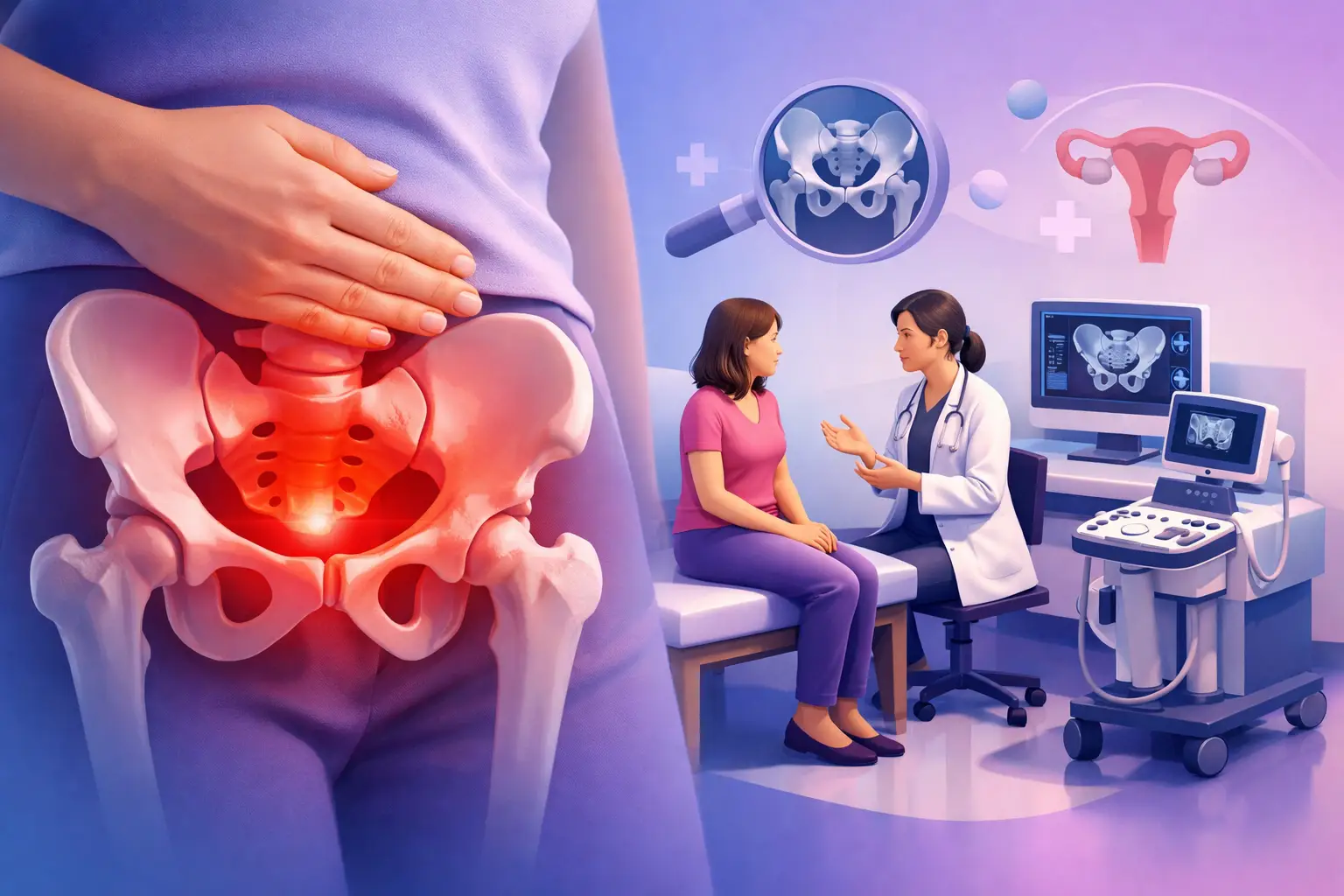
Targeted transvaginal ultrasound performed by an experienced clinician can assess the bladder, ovaries, uterus, and other common sites of deep endometriosis. Pelvic MRI may be recommended when more detailed mapping is needed, particularly when there is concern for multi-organ disease or when surgery is being considered.
Cystoscopy, a procedure that looks inside the bladder, may be useful in selected cases. It can help evaluate the bladder lining and exclude other causes of bleeding or urinary symptoms. However, endometriosis often begins from the outside of the bladder, so a normal cystoscopy does not always exclude disease in the bladder muscle or surrounding tissues.
Definitive confirmation may come from tissue examined after surgery. Yet surgery is not automatically the first step for every patient. Imaging, symptoms, response to treatment, fertility goals, and the risk of organ involvement all shape an individualized plan.
Treatment Depends on Symptoms and Your Goals
For women whose symptoms are manageable and who do not have signs of obstruction or organ risk, medical treatment may reduce inflammation and hormonal stimulation of endometriosis. Options can include continuous combined hormonal contraception, progestin-based treatment, or other hormone-suppressing medicines. These treatments can be effective for pain control, but they do not remove existing scar tissue or deeply infiltrating lesions, and symptoms may return after medication is stopped.
Pain management, pelvic floor physical therapy, and bladder-focused strategies can also have an important role, especially where muscle guarding or nerve sensitivity contributes to symptoms. This approach is not a dismissal of the pain. It recognizes that chronic pelvic pain can involve several interconnected systems and may respond best to coordinated care.
Surgery may be advised when symptoms remain severe despite medical treatment, imaging suggests deep bladder involvement, there is concern about the ureters or kidney drainage, or a patient is seeking a more definitive approach. The aim is to remove endometriosis thoroughly while protecting bladder capacity, nerve function, and reproductive organs whenever possible.
For superficial disease, excision may be performed without entering the bladder cavity. When a lesion extends into the bladder muscle, a partial bladder resection may be needed to remove the affected area completely. This is complex surgery and is best planned by a team experienced in deep infiltrating endometriosis, often with a urologist involved when the bladder or ureters are affected.
Advanced minimally invasive techniques, including 3D laparoscopy and robotic surgery, can support precise dissection in the confined spaces of the pelvis. Smaller incisions may mean less postoperative pain and a faster return to routine activities, but the most appropriate technique is the one that allows safe, complete treatment for your individual anatomy and disease pattern.
Fertility Considerations in Bladder Endometriosis
Bladder endometriosis does not automatically mean infertility. However, it can occur alongside endometriosis affecting the ovaries, fallopian tubes, or tissues that support normal pelvic anatomy. If pregnancy is a priority, it should be discussed before starting long-term hormonal suppression or planning surgery.
Fertility-preserving care considers more than whether the uterus and ovaries remain in place. It also considers ovarian reserve, the potential effect of surgery on reproductive tissues, the timing of pregnancy attempts, and whether fertility treatment may be appropriate. For some women, symptom control before trying to conceive is the priority. For others, surgery may improve pain, restore pelvic anatomy, or address disease that could complicate pregnancy planning.
There is no single best path. A treatment plan should be clear about what it is expected to improve, what uncertainties remain, and how it aligns with your timeline and preferences.
When a Specialist Opinion Can Make a Difference
If urinary symptoms repeatedly disrupt work, sleep, exercise, intimacy, or confidence, they warrant more than repeated short-term treatment. A specialist consultation can help distinguish bladder endometriosis from other conditions, review previous scans and procedures, and determine whether advanced imaging or multidisciplinary surgical planning is needed.
You do not have to wait until symptoms become unbearable to ask focused questions about your bladder health. Bringing a record of your cycle, urinary symptoms, urine test results, and prior imaging to your appointment can help create a clearer picture – and a treatment plan that protects both your comfort and your choices.