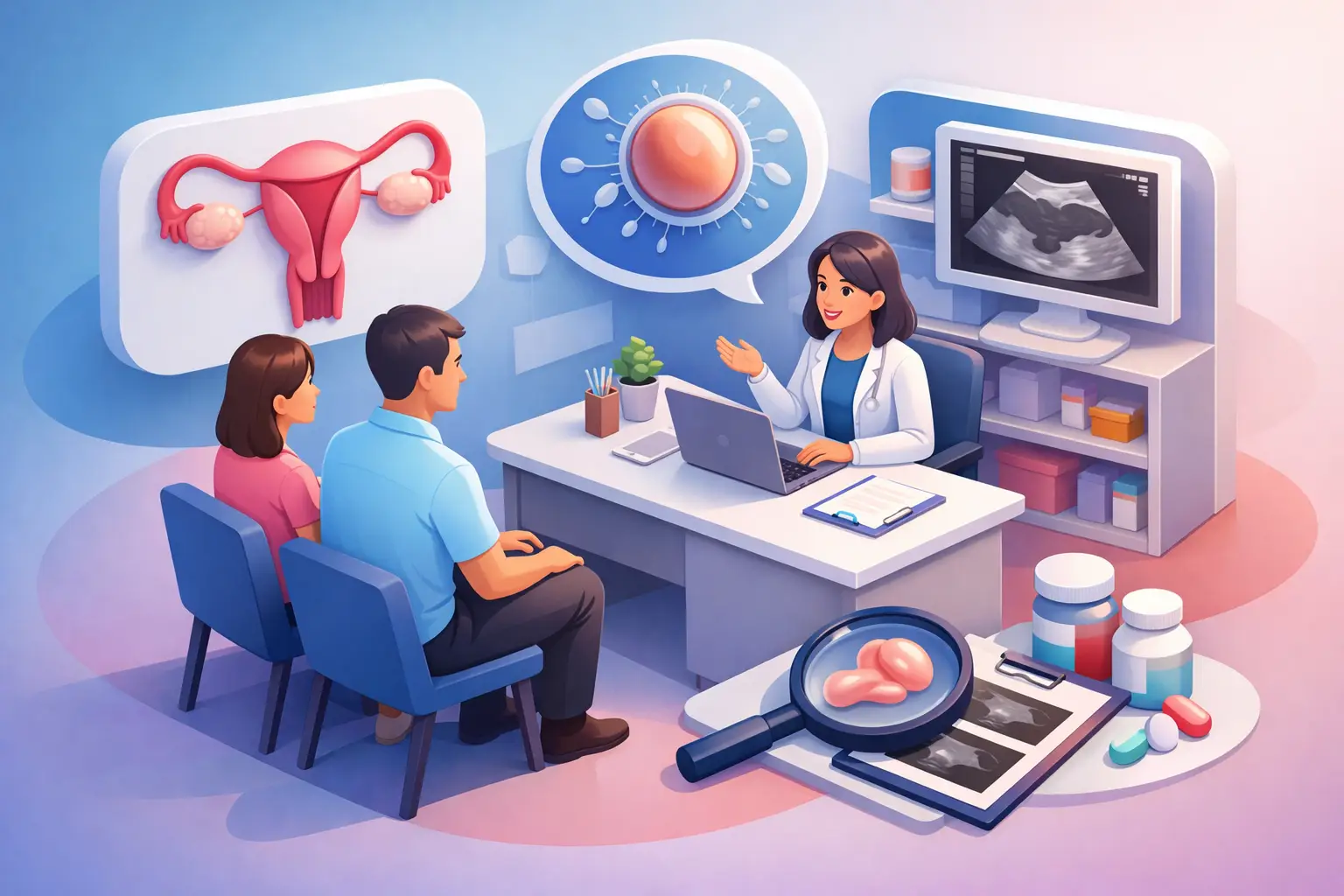

A scan may show an ovarian cyst. Pain with periods may be becoming pain throughout the month. Or you may have been told that endometriosis is affecting the bowel, bladder, or fertility. Endometriosis surgery examples can make the possible treatments easier to understand, but the right procedure is never chosen from a menu. It depends on where disease is found, how deeply it involves surrounding structures, the severity of symptoms, previous treatment, and your plans for pregnancy.
For many women, medication can reduce symptoms and remains an appropriate first step. Surgery may be considered when pain persists despite medical treatment, an endometrioma is present, anatomy is distorted by adhesions, fertility is affected, or imaging and examination suggest deep infiltrating endometriosis. A detailed consultation helps turn an unsettling diagnosis into a clear, individualized plan.
What surgery for endometriosis is designed to do
Endometriosis occurs when tissue similar to the lining of the uterus grows outside the uterus. It can cause inflammation, scarring, and adhesions that may pull pelvic organs from their usual positions. Lesions can be superficial, but they may also grow deeply into the tissue of the pelvis, including the bowel, bladder, ureters, diaphragm, or nerves.
The goal of surgery is not simply to make lesions look better on a scan. It is to treat disease carefully while protecting healthy organs, relieving symptoms where possible, restoring pelvic anatomy, and preserving fertility when that is important to the patient. In complex cases, this requires precise planning and an experienced multidisciplinary surgical team.
Most procedures are performed by laparoscopy, using a camera and fine instruments through small abdominal incisions. Depending on the case, 3D laparoscopy or robotic surgery can offer enhanced visualization and dexterity for delicate dissection. Some patients may also be suitable for vNOTES surgery, which accesses the pelvis through the vagina and avoids external abdominal scars. The technique should serve the clinical need, not the other way around.
Endometriosis surgery examples by type of disease
Excision of superficial endometriosis
In superficial peritoneal endometriosis, lesions are located on the thin lining of the pelvis. During laparoscopic surgery, the surgeon identifies visible disease and excises it, meaning it is cut away from the surrounding tissue. Removing lesions rather than only treating their surface can allow tissue to be sent for laboratory confirmation and may offer more complete treatment when disease extends beneath what is visible.
This may be appropriate for women with persistent pelvic pain, painful periods, pain during intercourse, or pain when passing stool or urine that appears related to superficial lesions. However, pain can have more than one cause. Pelvic floor muscle tension, adenomyosis, bowel conditions, and bladder conditions may contribute, so surgery is not a guaranteed answer to every symptom.
Ovarian endometrioma cystectomy
An ovarian endometrioma is a cyst caused by endometriosis within the ovary. It is sometimes called a chocolate cyst because it can contain old blood. Surgery may be recommended if the cyst is large, painful, suspicious in appearance, ruptured, interfering with fertility treatment, or making it difficult to assess the ovary accurately.
A cystectomy involves separating and removing the cyst wall while preserving as much healthy ovarian tissue as possible. This is especially relevant for women who hope to conceive, because surgery on an ovary can affect ovarian reserve. The decision needs careful discussion: leaving an endometrioma in place may also have consequences, while removing a small, stable cyst before fertility treatment is not always the best choice.
Adhesiolysis to restore pelvic anatomy
Adhesions are bands of scar tissue that can cause the ovaries, uterus, bowel, or pelvic sidewall to stick together. In severe disease, the ovaries may be drawn behind the uterus, sometimes described as “kissing ovaries.” Adhesiolysis is the careful division of these adhesions to free organs and restore their normal movement and position.
This procedure may be part of a broader excision surgery. It can improve access to endometriosis hidden by scar tissue and may help address pain or fertility concerns caused by distorted anatomy. Adhesions can recur, particularly when inflammation continues, which is why postoperative medical management and follow-up may be discussed.
Deep infiltrating endometriosis excision
Deep infiltrating endometriosis extends more than a few millimeters beneath the pelvic surface. It may involve the tissue behind the uterus, the uterosacral ligaments, the rectovaginal space, bowel, bladder, or the ureters that carry urine from the kidneys to the bladder. These cases require a high level of surgical expertise because the disease may lie close to nerves and vital organs.
Excision can involve releasing the ureters, removing disease from the bladder wall, or treating disease around the bowel. When the bowel is affected, the operation may range from shaving superficial disease from its outer surface to removing a small disc of bowel wall or, less commonly, performing a segmental bowel resection. The safest approach depends on the depth, size, location, and number of bowel lesions, as well as symptoms and the degree of narrowing.
Multi-organ surgery may involve a colorectal surgeon or urologist alongside the gynecologic surgeon. This collaboration is not a sign that treatment is more alarming than expected. It is a planned safety measure that brings the right expertise into the operating room when disease crosses specialties.
Hysterectomy for selected circumstances
A hysterectomy removes the uterus and may be considered for women with severe symptoms who do not wish to carry a future pregnancy, particularly when adenomyosis, fibroids, or heavy bleeding are also significant problems. It is sometimes performed with excision of endometriosis rather than instead of excision.
A hysterectomy is not automatically a cure for endometriosis. Endometriosis lesions outside the uterus can remain unless they are treated, and pain can persist for some women. Whether to retain or remove the ovaries is another individualized decision, balancing the possible benefit of reducing hormonal stimulation against the health effects of early menopause.
How surgeons choose the right approach
Before recommending surgery, a specialist considers your symptom pattern, medical history, prior surgeries, fertility priorities, physical examination, and imaging. Ultrasound performed by an experienced operator and MRI can help map deep disease, but no test identifies every lesion. The full extent of endometriosis is sometimes only seen during surgery.
For straightforward disease, conventional laparoscopy may be entirely appropriate. For extensive scarring or endometriosis involving the bowel, bladder, ureters, or difficult-to-reach pelvic spaces, robotic surgery or 3D laparoscopy may support precise dissection. At Dr. Sharifah Halimah Jaafar’s practice, advanced minimally invasive options are considered in the context of the individual case, with a focus on safe treatment, minimal tissue trauma, and fertility preservation where possible.
Ask practical questions during your consultation: What disease is suspected, and where? Is the plan excision, ablation, or both? Could other specialists be needed? What are the risks to the bowel, bladder, ureters, ovaries, and fertility? What recovery support will be available? Clear answers help you give informed consent and prepare with confidence.
Recovery and care after surgery
Recovery varies with the extent of surgery. After uncomplicated laparoscopy, many patients return to light activities within days and need a few weeks before resuming more strenuous routines. Deep endometriosis surgery, bowel procedures, or hysterectomy usually require a longer recovery period. Pain control, wound care, bowel function, mobility, and emotional well-being are all part of postoperative care.
Surgery treats existing disease, but endometriosis can recur. If pregnancy is not being pursued immediately, hormonal treatment may be recommended after surgery to reduce the chance of symptoms returning. If fertility is the priority, the next steps may include trying naturally for a defined period or speaking with a fertility specialist. Neither route is one-size-fits-all.
When endometriosis disrupts work, relationships, sleep, or plans for a family, you deserve more than reassurance that pain is something to endure. A specialist assessment can clarify which of these surgical options may be relevant, what they can realistically achieve, and how to protect the parts of your health that matter most to you.